


This article was created with Wrot, a publishing platform that tracks the process behind my writing. View my work’s original process on Wrot.
Hi! My name’s Caer Mistral Sanders; I’m a co-founder and architect working on AI at Glacis. Before that, I built agentic AI platforms for Thoughtworks as a principal product engineering manager, and architected data and ML platforms as a staff engineer at Wayfair. I’m obsessed with mechanical sympathy.
But I won’t be chatting about any of those experiences today.
Plenty of people are writing about how software engineering is changing at startups and larger enterprises, but it’s harder to find actionable anecdotes of how it’s changing at the ground floor.
Which is why, in this essay, I’m chatting about how AI has changed the way I approach engineering work as a solo founder in my independent product and research studio, With Caer.
Through this studio, I’ve built educational robotics platforms alongside Google engineers, developed games, patented cryptographic consensus protocols, and most recently built Wrot, which is what I’m writing with—̅and about—̅today.
Specifically, I’m writing about a new approach to engineering I call Engineering With Concept Art. A distant, more iterative cousin of spec-driven development, it aims to make code reliably regenerable from a set of living concept docs, durable “seams”, and external conformance tests.
But first: Backstory!
FYI: The views I share in this essay are mine, and mine alone. They don’t reflect those of my current or past employers.
Dogs, Cows, and Phoenixes
Earlier this year, I was chatting with Charity Majors about her essay on AI and engineering discipline and the way AI is transforming code from precious “pets” to disposable “cattle.”
At first, this pets-vs-cattle analogy gave me an odd feeling: Immutable infrastructure (the origin of this metaphor) made systems more deterministic, whilst AI-generated code is less deterministic.
When I shared this feeling, Charity urged me on a sidequest to read Chad Fowler’s essays on regenerative software and the Phoenix Architecture.
Chad began writing these essays back in December of 2025, and they’re rooted in a bold thesis:
“The most durable systems of the AI era will be built from code that’s meant to die.”
This thesis is supported by a common theme in his essays: Code isn’t the product. If we’re afraid of throwing code away, we’ve embedded special meaning into it that should be captured elsewhere.

Let’s dig into this theme, and some of its consequences.
Disposable Code
First, if throw the code away sounds like throw the product away, something has gone terribly wrong.
The real product is everything that enables someone to fearlessly discard and regenerate all the code: Clear invariants, robust conformance tests, and documented intent behind every feature.
With this framing, the code becomes a regenerable detail of the product. It becomes disposable cattle instead of a precious pet.
References: The System Is The Asset, Evaluations Are the Real Codebase, The Death and Rebirth of Programming, and Provenance Is The New Version Control.
Precious Seams
Second, when regenerating code, we must conserve its published interfaces—̅the seams where users meet the product.
These seams form the boundaries between the smallest meaningfully regenerable “grains” of a product. No matter how often these grains change, their seams must be preserved.

Seams form the precious interface between the product and the world. They can be as abstract as an API or protocol other products depend on, or as concrete as a user interface with users who’d scream if a button moved ten pixels to the left.
References: UI Is a Conservation Layer, The Regenerative Grain, Compile to Architecture, and n=1 Is a Design Constraint (Not a Staffing Model).
Boundless Futures
Third, if seams are precious, we could say that the more we have, the fewer options we have when building new features: Each new feature introduces new seams, and grains that depend on them.
Without clear intent, new features will be generated with no regard for our future options. It can, and will, become impossible to add new features without changing (aka breaking) existing seams.
Kent Beck describes this tradeoff as “Futures vs. Features”, where “futures” are the options we have when building a feature. Left unchecked, each new feature can rob us of future options.
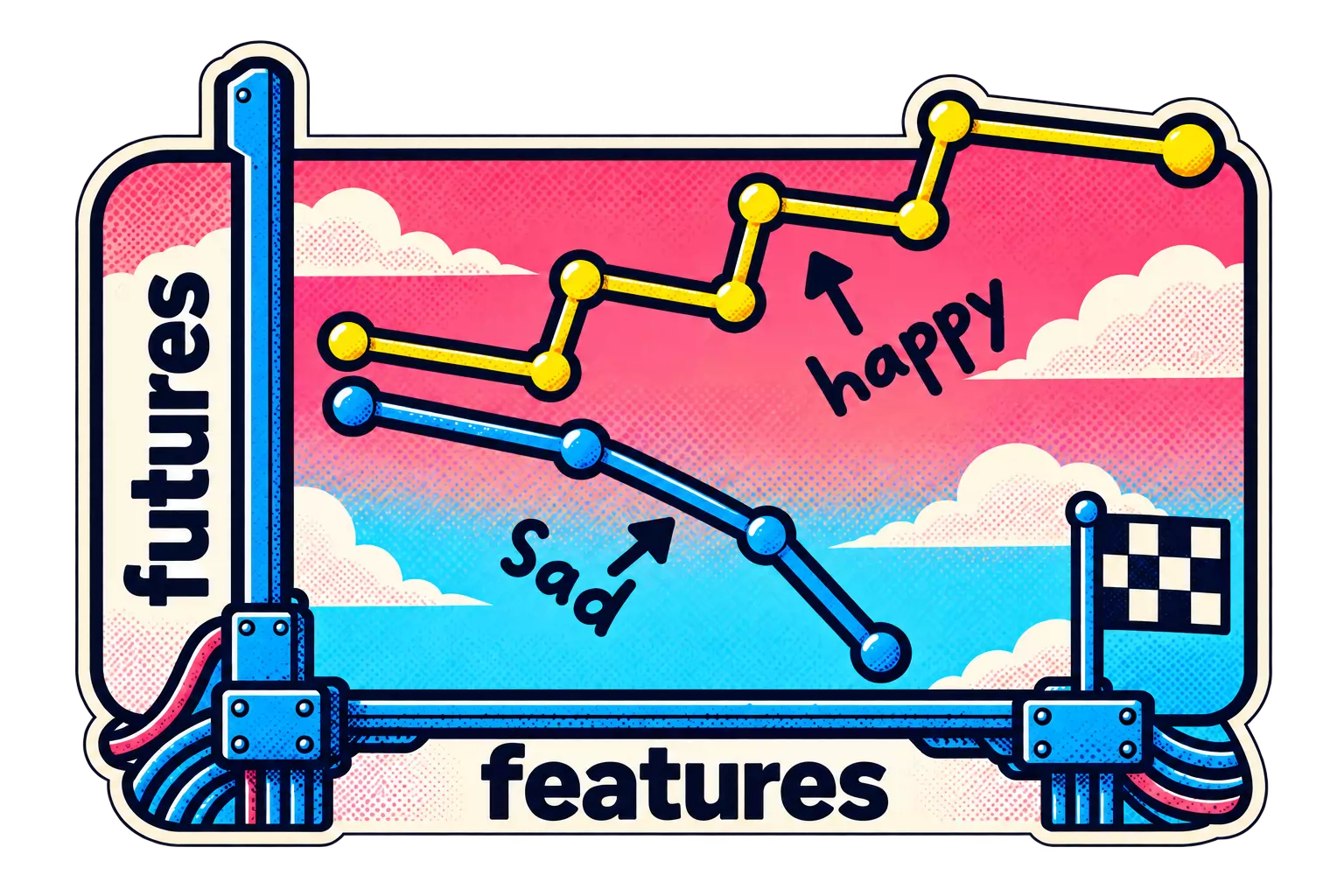
This problem is not new, but AI accelerates it. With enough Ralph loops and dark factories, each feature might touch a thousand lines of unrelated grains and seams trying to reconcile a lack of options.
But isn't code disposable?, you ask. Yes it is! In fact, in his essays, Chad argues that AI-generated code only becomes legacy tech debt when it’s hand-edited instead of being regenerated.
But while code is regenerable, the seams it implements are precious. We don’t want AI to arbitrarily regenerate seams or flippantly generate new ones.

Chad gets at this nuance when describing pace layers: It can make sense to vibe code “fast” and ephemeral grains (like glue code), but it can be important to carefully build “slow” foundational seams (like security protocols).
It’s the engineer’s job to reconcile new seams’ needs with existing seams’ constraints. This reconciliation has always been the engineer’s job—̅AI just made the expected feedback loop shorter.
References: Conceptual Mass and the Compaction Discipline and Compaction Is a Financial Strategy.
Engineering With Concept Art
I’ve long considered myself an AI skeptic (in no small part due to the biases I found in GPT-2’s early training data). In fact, just months ago, I shared on the Thoughtworks podcast that I strongly believe in reading every line of code.
When I first read Chad’s work on the Phoenix Architecture, it felt very AI heavy—̅and theoretical. Indeed, it took me weeks of reading and re-reading to frame his work in the way I shared here.

However, despite my beliefs, the idea of regenerative software intrigued me. Does it work? What do grains and seams look like in practice? I knew one way to find out: Build a product.
So I did. If you’re reading the original copy of this essay, you’re using that product right now: Wrot.
Defining Concepts
Wrot was born from a single, silly concept:

I borrow the term “concept” from the phrase “concept art”, which is often used in creative works like games and movies to establish the idea—̅the intent—̅of a product without fully creating it.
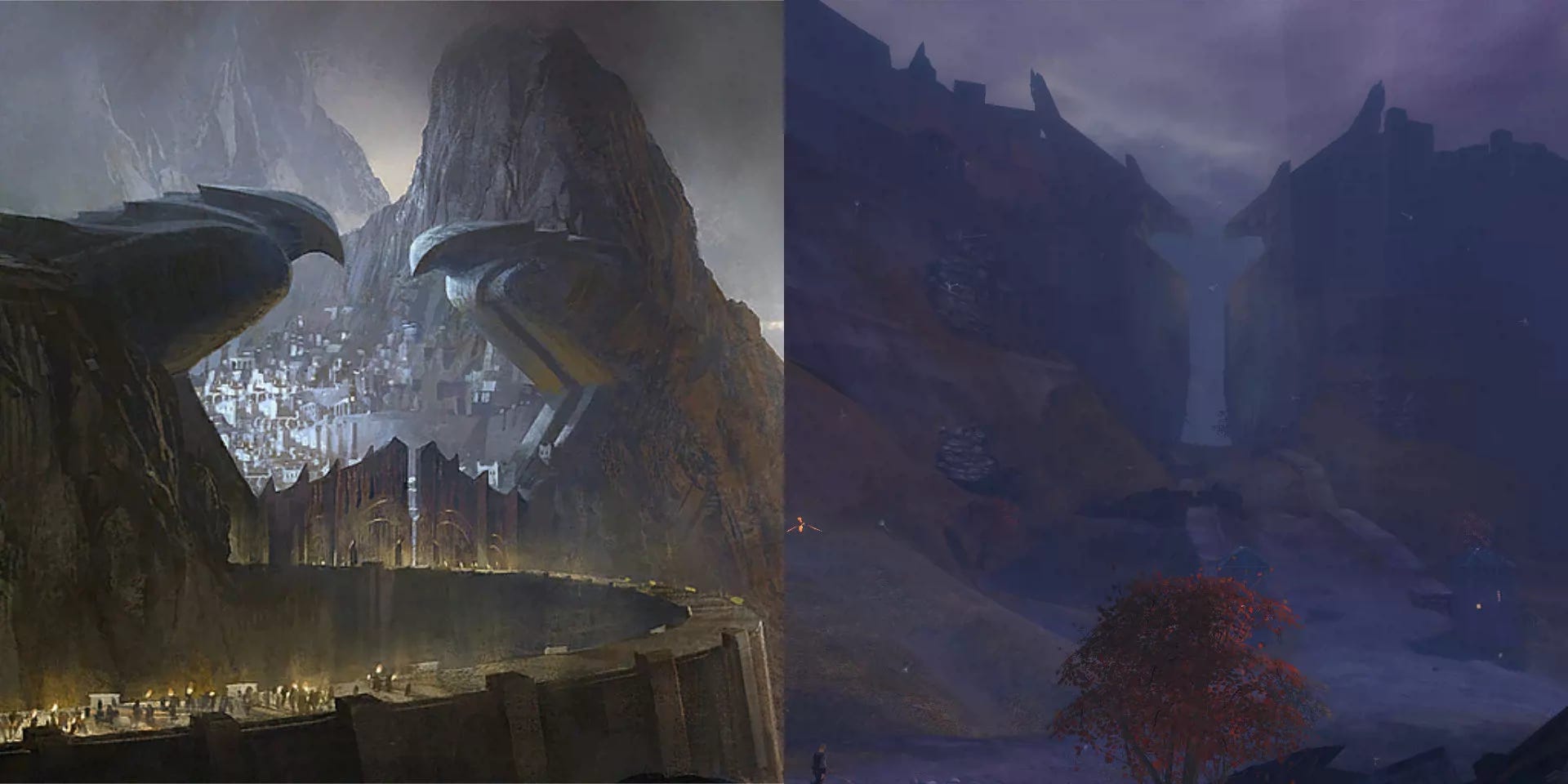
When translated to engineering work, I define concepts as Markdown docs that outline the functional intent of some part of a product. Here’s an excerpt from Wrot’s text editor concept doc:
#### Decorative Em-Dash

The character sequence `--` within any text content in any CommonMark "Leaf Block" of the Markdown source will be _replaced_ with `—̅` in the rendered text.
Like a piece of concept art, this excerpt is merely illustrative: It doesn’t specify details like the color of the em dashes or the many, many edge cases that should be considered when rendering them.

[Word] Engineering formula has run its course. So, I call it “Engineering With Concept Art.”Refining Concepts
Once the concept is in place, I ask my agent du jour (often Opus, sometimes Fable) to start implementing the concept.
To help guide my agents, my typical AGENTS.md starts with:
See [CONTRIBUTING.md](CONTRIBUTING.md) for _how_ to build.
See [the concepts](concepts/README.md) for _what_ to build.
See [the conformance suite](conformance/README.md) to know if it's built _right_.

These documents may contain `> [!AGENTS]` callouts with context-specific instructions and `> [!DESIGN]` callouts capturing nominal presentation choices (copy, labels, colors, timings). Treat `[!DESIGN]` callouts as normative when building or regenerating UI.
I believe it’s important to hand-write concepts, but I realized early on that it’s incredibly useful to let agents sprinkle their own commentary throughout the concepts. To facilitate this commentary, I borrowed GitHub’s ‘callouts’ syntax.
Whenever an agent discovers a gap in a concept, or decides on a narrow interpretation of the concept during implementation, it’s free to add one of these callouts to the source concept.

Here’s a callout an agent added to the decorative em dash concept from earlier:
> [!DESIGN]
>
> The overlined em dash is nominally rendered as a substituted `—` widget with a CSS overline drawn by its `::after` pseudo-element (see the conserved `_editor-theme.scss`), rather than by emitting the combining overline character `̅`: The CSS rendering is simpler and more robust across fonts.
In contrast to spec-driven development which aims to fully specify a product from the beginning, these free-form and agent-mutable concepts enable me to move faster by starting from a base hypothesis that I iteratively refine.
Capturing Seams
By design, even the most robust set of concept docs isn’t enough to “phoenix” a codebase from scratch. At a minimum, I believe we need:
The concept docs.
The seams.
Within Wrot, I use Codas (a Markdown-defined data format I created) to document nearly all of the API and data seams in a separate doc alongside the concept docs. Here’s an excerpt of one of the seams for a database record, in Coda notation:
## `RevisionRecord` Data

An index entry resolving a permalink to a published revision, per [publishing](service.md#publishing).

+ `seal_hash` array of 32 u8

+ `work_uuid` array of 16 u8

+ `published_at` u64

    UNIX epoch milliseconds.

+ `heads` list of array of 32 u8
Conversely, for user-facing seams, I’ve learned the best way to document them is...to rarely regenerate them: Assets like HTML and stylesheets are often more expressive and specific than any plain-language specification could hope to be.
In practice, I often treat user-facing assets like HTML and CSS files as something of a hybrid between a concept doc and a regenerable artifact: I’ll periodically let agents fully rewrite them, but only one at a time, so that I can meaningfully and manually review the result.

The most common case for this regeneration is when I feel like a given feature is constraining my future options—̅like when an asset becomes bloated with unnecessary context, and could be simplified.
Ensuring Conformance
Armed with my concept docs and seams, I can regenerate my codebase from scratch and get a decent approximation of its key features. But it will be different—̅potentially in a bad way.
That’s where the third tool in our arsenal comes into play: Conformance tests. These tests aren’t unit tests. They’re integration tests that run against the product from the outside.
For Wrot, I took the extreme route and decided to implement my conformance testing suite in an entirely different language (Python) from the rest of my stack (Rust and JavaScript). This separation helps ensure no implementation code leaks into the conformance tests, and vice-versa.
Every time I introduce a new feature (and by extension, new seams), I instruct my agents to generate a new set of conformance tests that immortalize the current behavior of the feature.
Whenever the grain between seams is regenerated, or whenever a new seam is added, I run these conformance tests end-to-end. If they all pass, I know that none of the things I’ve explicitly cared about in the past have changed (yay!).
Read Your Writes
My experience building Wrot has challenged my original belief that I need to read all the code, all the time—̅not because AI is generating more code than I can review, but because I haven’t found a meaningful bug during my manual code review in months.
Early on in Wrot’s development, I read all the code manually. But as I converged on a set of seams and conformance tests that satisfied me, I developed more confidence in these artifacts’ ability to shape the code, and became less concerned with the code.

Eventually, I realized that reviewing my concept docs, seams, and conformance tests enabled me to review the majority of agents’ decisions (and mistakes) without reading much code at all.
What this experience taught me is that reading the code early on in a concept’s life cycle is incredibly important to me. Reading the code helps me build an understanding of and trust in it before I’ve gained confidence in its seams or conformance tests.
But once I have that confidence, I mainly review the artifacts I’m hand-writing—̅the concept docs and the seams—̅and the conformance tests I’ve commissioned from agents. These are where my rigor lives. I call this practice of rigor “reading your writes”, which is a play on a concept from distributed consistency theory.
Sometimes, I still prefer reading the code anyway—̅like when I’m working on performance-critical or safety-sensitive code in the Codas codebase. Moderation in all things!
Of course, no matter how confident I am in these non-code artifacts, I still believe every line of code I ship is mine to own: The human cost of failure exists no matter who or what incurred it, and I know that when something breaks in production, I’ll be accountable—̅not the AI genie in a bottle.
With that said, rigorously defined concepts, seams, and tests have become the primary source of determinism in my products.
They’ve become my hand-fed pets; my code, regenerable cattle.
A Small Addendum
The entire process I describe in this essay is remarkably similar to how I used to write my patents and their code in parallel pre-AI (I’m looking at you, Metablockchain).
I’d painstakingly decide on the many invariants and properties the system had to have, write a patent, write the code, test the code, then restart from step one. This process probably sounds cool and rigorous, but it sucked: It could take me weeks between drafting a patent spec and testing it in a simulated environment.
But as Jessica Kerr writes: “AI code can be more rigorously developed and more thoroughly checked than what we write unassisted. We can have nice things!”
Now, with the process I described in this essay, I can do much the same work—̅in hours—̅and all I have to write by hand is the patent. I can lend the level of rigor I used to reserve for patent work...to all my work! In fact, I used this exact approach to rapidly test Wrot while I was drafting the patent for its Shadow Provenance feature (yup, it’s patent pending, I’m a nerd).
Acknowledgements
Charity Majors, for inspiring this entire essay, giving thoughtful editorial feedback that greatly improved it, and creating every delightfully bright graphic and sticker I used in this piece.
Gergely Orosz and The Pragmatic Engineer team, for reviewing the first draft of this essay, and considering it as a “high-effort” entry into their October 2026 essay challenge.
Chad Fowler, for introducing me—̅and perhaps the world—̅to the concept of regenerative software through so many thoughtfully written articles (many of which I link to above).
Martin Fowler, for introducing me to the idea of “legacy seams”, which inspired the more general “seams” in this article.
Kent Beck, for introducing me to the idea of “software futures”, which at first were confusing to me, but I now see as a perfect analogy for a subtle engineering problem I’ve seen for years.
Claude Opus 5.5 and Fable 5.1, for generating numerous patches to Wrot to support the very long provenance of this essay (I’m a messy writer, ok?).
This is super intriguing, thank you for sharing! When you were building Wrot, did you come up with a baseline set of concepts and seams before you started generating code? Or was the process more iterative from a single concept? Would be interested to hear more details around the actual process of building at some point!